

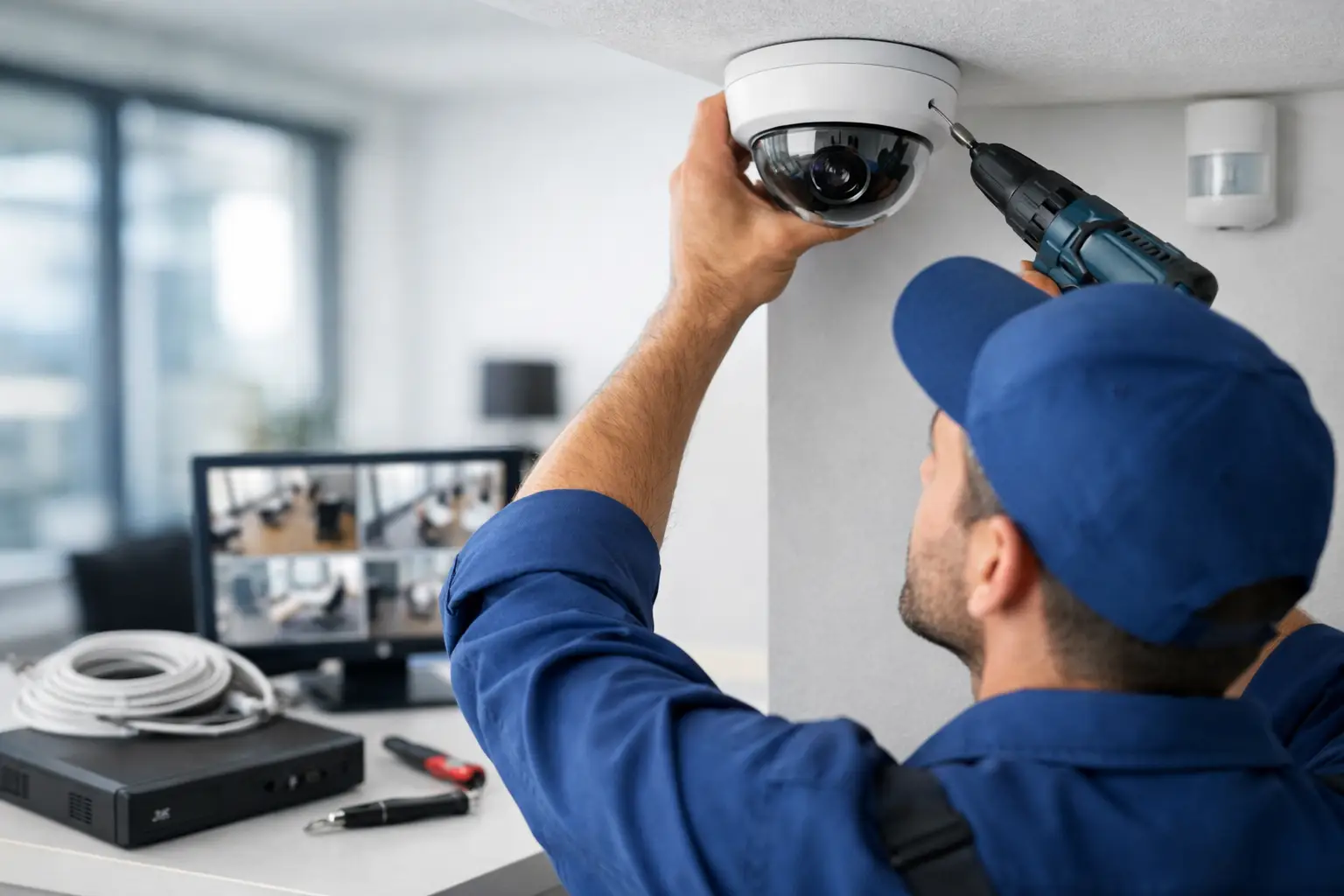
A camera mounted in the wrong place, a door reader added without planning, or cabling installed with no room to grow can turn a security upgrade into a daily frustration. Business security system installation is not just about putting devices on walls. It is about designing a system that protects people and property while still supporting how your site actually operates.
For commercial properties, that distinction matters. A retail store, warehouse, office, medical building, and multi-tenant site all have different traffic patterns, risk points, and infrastructure needs. The right installation approach starts with those realities, not with a one-size-fits-all package.
What business security system installation should actually solve
A good commercial security system should do more than record incidents after the fact. It should help reduce blind spots, control who can enter key areas, support investigations, and make day-to-day oversight easier for managers and staff.
That often means combining several systems into one plan. Video surveillance, access control, intercoms, alarm integrations, and structured cabling all affect each other. If they are treated as separate projects by separate vendors, problems show up fast. You end up with duplicated work, inconsistent coverage, and systems that do not communicate well.
A properly planned installation looks at the whole site. It considers entrances, loading areas, parking lots, interior corridors, server rooms, cash handling points, and employee-only spaces. It also considers practical factors such as network capacity, power availability, retention requirements, and whether your team needs remote access to footage or door events.
Why professional business security system installation matters
Commercial buyers usually understand the value of security hardware. Where projects often go sideways is installation quality. A strong camera line may still underperform if it is aimed poorly, exposed to glare, or installed on unstable mounts. Access control can create bottlenecks if reader placement and door schedules do not reflect actual staff movement.
Professional business security system installation reduces those issues early. It starts with a site review and a design that accounts for operational use, code considerations, and infrastructure constraints. That process is less glamorous than talking about camera specs, but it is usually what separates a reliable system from an expensive headache.
There is also the issue of scalability. Many businesses start with a few doors and cameras, then expand. If the original cabling, network planning, and equipment choices were too limited, every expansion becomes more disruptive and more expensive than it needs to be.
The planning stage most businesses should not skip
Before installation begins, the first question should be simple: what problem are you trying to solve?
If theft is the main concern, camera placement and image quality at transaction areas, exits, and inventory zones may take priority. If unauthorized entry is the bigger risk, then door control, credential management, and visitor access may matter more. If the concern is liability, then coverage of common areas, parking lots, and after-hours activity may lead the design.
This is also the point where trade-offs become clear. More cameras are not always better if they create storage burdens without improving useful coverage. Cloud-managed access control may improve administration, but some sites still prefer local control depending on policy, network environment, or compliance needs. AI-enabled surveillance can add real value with vehicle, person, or event detection, but only if the system is configured around genuine business needs rather than novelty.
For many Southern California businesses, site layout adds another layer. Large parking areas, multiple tenant entries, warehouse roll-up doors, and detached structures require more careful planning than a small single-suite office. Outdoor heat, sun exposure, and long cable runs can also affect equipment choices and installation methods.
Cameras, access control, and cabling need to be designed together
One of the biggest mistakes in commercial security is treating surveillance, access control, and infrastructure as separate decisions. In practice, they are tied together.
A camera system depends on proper network design, clean cabling, storage planning, and smart placement. An access control system depends on reliable door hardware, reader positioning, user management, and often integration with video. Intercom systems may need to work with both visitor management and entry control. If the backbone is weak, the whole system suffers.
That is why integrated planning matters. When one provider can design and install the low-voltage backbone along with the security devices, there is usually better coordination and fewer gaps. You avoid situations where the cabling contractor blames the camera vendor, or the access control installer says the network team did not leave enough capacity.
For businesses upgrading older properties, this matters even more. Legacy buildings often have mixed infrastructure, undocumented cable paths, and equipment added in phases over many years. A professional installer should account for what can be reused, what should be replaced, and where future growth should be built into the plan.
What to expect during a commercial installation
A well-run project should feel organized, not disruptive. That starts with a walkthrough and a clear scope of work. You should know which areas are being secured, what equipment is being installed, how cabling will be routed, and whether work will affect business hours.
During installation, the best commercial teams think beyond device placement. They label cabling, keep equipment areas orderly, coordinate with site contacts, and test the system in real operating conditions. It is one thing for a camera to power on. It is another for it to capture useful detail during bright afternoon light, after-hours darkness, or heavy foot traffic.
The same goes for access control. A reader that works in a demo may still need schedule adjustments, credential group changes, or door timing refinement once staff begins using it. Good installers expect that final tuning is part of the job.
Training also matters. Your team should know how to retrieve footage, manage credentials, respond to door alerts, and handle common administrative tasks. Without that handoff, even a well-installed system can become underused.
Choosing the right installer for a business security system installation
Commercial buyers should look past price alone. Security systems are infrastructure. If the installation is poor, the cost shows up later in service calls, downtime, blind spots, and frustrated staff.
A qualified commercial installer should understand licensing requirements, liability expectations, and the realities of active business environments. They should be able to explain why a certain camera type fits a loading dock better than a hallway, or why one access control platform makes more sense for a multi-site operation.
It is also reasonable to ask how the company handles support after the install. Businesses do not just need hardware. They need a partner who can make adjustments, troubleshoot issues, and help plan future expansion. That is especially true for growing organizations that may add suites, users, doors, or remote locations over time.
In markets such as Ontario, Rancho Cucamonga, Los Angeles, and surrounding commercial corridors, many facilities need systems that balance security with fast-moving operations. Warehouses need broad coverage and reliable entry control. Offices need controlled access without burdening employees. Multi-tenant properties need visibility across shared and private spaces. The installer should understand those differences before recommending equipment.
When it makes sense to upgrade instead of patching an old system
Some businesses try to extend the life of an outdated system by replacing a few cameras or repairing one failing door at a time. Sometimes that is reasonable. If the core platform is still dependable and expansion is limited, selective upgrades can buy time.
But patching only works for so long. If footage is hard to retrieve, image quality is poor, credentials are difficult to manage, or your site has outgrown the original design, a larger upgrade is usually the smarter move. The goal is not to replace everything for the sake of replacing it. It is to stop spending money on partial fixes that never fully solve the problem.
This is where a commercial specialist can add real value. A company such as Resource One Low Voltage Security can evaluate whether your current system has a workable foundation or whether a fresh design will save time and money over the next several years.
Security works best when it supports the business instead of slowing it down. The right installation gives you visibility where it matters, control where it counts, and room to grow without rebuilding every time your operation changes. If your current setup feels pieced together, that is usually a sign the next step should start with design, not just equipment.