

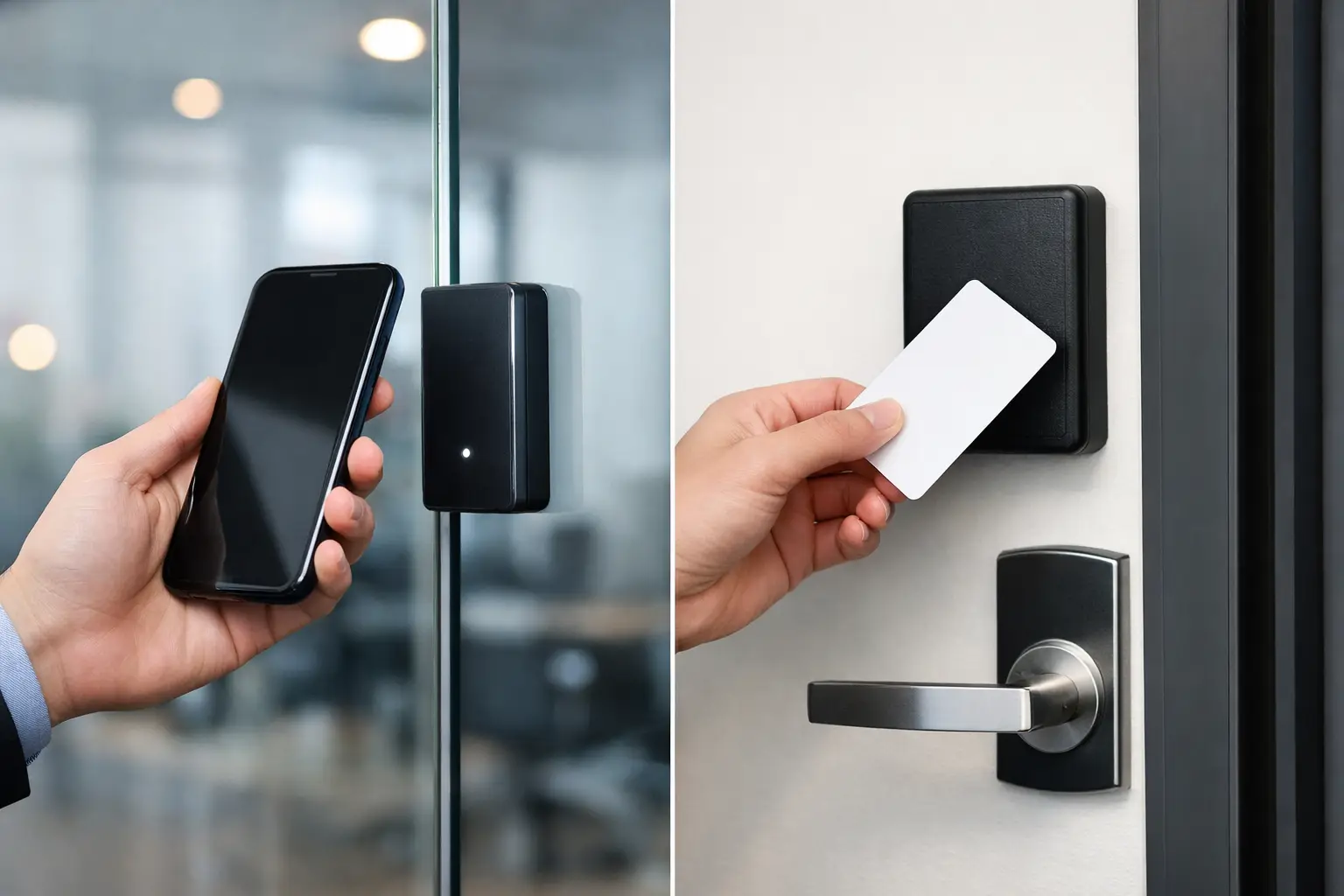
If you are weighing openpath vs keycard systems, the real question is not which one sounds newer. It is which one fits the way your business actually operates day to day. A warehouse with rotating staff, a medical office with compliance concerns, and a multi-tenant commercial property can all need very different access control strategies.
For most commercial buyers, access control is no longer just about locking and unlocking doors. It affects employee movement, visitor management, after-hours accountability, lost credential costs, and how quickly you can respond when something goes wrong. That is why the decision between a mobile-first platform like OpenPath and a traditional keycard system deserves a closer look.
OpenPath vs keycard systems: the core difference
Traditional keycard systems rely on physical credentials. Employees carry a card or fob, present it to a reader, and the system grants or denies access based on programmed permissions. This model is familiar, widely used, and still effective in many commercial environments.
OpenPath, now commonly referred to as a modern cloud-based access control platform, shifts much of that experience to mobile credentials and remote management. Instead of depending primarily on plastic cards, users can access doors with a smartphone, while administrators manage permissions, schedules, and activity through a web-based interface.
That difference sounds simple, but it changes how the system is used, maintained, and expanded. Keycard systems are often built around on-site hardware and manual credential handling. OpenPath is built around software flexibility, cloud administration, and a lower-friction user experience.
Where traditional keycard systems still make sense
There is a reason keycard systems remain common in offices, industrial sites, schools, and multi-tenant properties. They are straightforward. Most employees understand them immediately, and many organizations already have policies built around issuing badges.
In some environments, physical credentials are still the better fit. If your workforce does not consistently use company-approved smartphones, mobile credentials may create more management overhead than they solve. The same can be true in facilities where phones are restricted on the floor, where unions or internal policies require separate credentialing, or where visitors need quick temporary access without app setup.
Keycard systems can also feel more tangible to organizations that want visible identification. A badge can function as both an access credential and an employee ID, which matters in larger buildings or customer-facing environments.
That said, the convenience of keycards comes with maintenance. Cards get lost, copied, forgotten at home, or passed between users. Replacement costs add up over time, especially in businesses with turnover, contractors, or multiple shifts.
Where OpenPath stands out
OpenPath is attractive because it reduces friction for both users and administrators. Employees are less likely to forget their phones than their badges. Administrators can issue or revoke credentials quickly without chasing down cards. For businesses that manage multiple locations, the ability to oversee doors, schedules, and users from one platform is a major operational benefit.
The user experience is also different. Mobile-enabled entry can make access feel faster and more natural, especially in busy office settings. For leadership teams trying to modernize building operations, that convenience matters.
From an administrative side, cloud-based control is often the biggest advantage. If an employee leaves, permissions can be removed immediately. If a vendor needs limited access for a specific time window, that can often be handled without an on-site visit. For growing companies, this makes access control less of a manual task and more of a managed business system.
This is one reason many commercial properties in markets like Los Angeles and the Inland Empire are moving toward more flexible access platforms. Businesses want tighter control without adding more daily administrative work.
Security is not just about the credential
When comparing openpath vs keycard systems, many buyers focus too heavily on whether a phone is safer than a card. The more useful question is how the full system handles identity, permissions, monitoring, and response.
A basic keycard system can be secure if it is properly installed, well managed, and paired with the right door hardware and reporting. But older systems are often weaker in practice because permissions are not updated consistently, audit trails are limited, or credentials remain active longer than they should.
OpenPath can strengthen security through faster credential management, better visibility, and more centralized control. But no platform is automatically secure just because it is newer. A mobile-first system still depends on proper configuration, strong admin practices, reliable network design, and correct integration with door position sensors, request-to-exit devices, intercoms, and video systems.
In other words, the installer and system design matter as much as the brand choice. A poorly planned OpenPath deployment can create frustration. A properly designed keycard system can outperform a more advanced platform that was installed without attention to workflow.
Cost depends on how you measure it
Many decision-makers start with hardware pricing, but that is only part of the cost picture. Traditional keycard systems may look familiar from a budgeting standpoint, especially if your team is used to buying cards, printers, and on-premise equipment. For some sites, that can still be a practical path.
OpenPath may involve subscription-based software costs or different hardware investments, depending on the system design. At first glance, that can raise concern. But operational savings often show up elsewhere. Less time issuing cards, fewer truck rolls for changes, simpler multi-site administration, and easier user management can offset the upfront difference.
The right cost comparison should include the full lifecycle of the system. Ask how often staff changes. Ask how many credentials are replaced each year. Ask whether multiple locations are managed by one team. Ask whether your security setup is likely to expand into cameras, intercoms, visitor access, or remote site control.
A cheaper system on paper can become the more expensive system to manage.
Scalability and integration matter more than most buyers expect
Access control decisions tend to stay in place for years. That means the better question is not just what works now, but what still works when your business adds space, changes staff structure, or standardizes security across several sites.
Traditional keycard systems can scale, but not all of them scale efficiently. Some become harder to manage as the number of doors and users grows. Some older platforms also have limitations when you try to integrate them with modern video surveillance, remote administration, or visitor workflows.
OpenPath is often better suited for organizations that expect growth or want a more connected security environment. If you want your access control to work alongside video, intercom entry, remote unlock capability, and centralized reporting, a modern cloud-managed platform can offer a cleaner path forward.
This is especially relevant for commercial property managers and multi-site operators who need consistency. A system that works well at one office but becomes difficult across five locations can create long-term operational drag.
Which system is better for your business?
It depends on your environment, your workforce, and your management style.
If your organization values familiar workflows, visible badges, and simple credentialing for a stable employee base, a traditional keycard system may still be the right fit. It can be reliable, effective, and easier to align with existing policies.
If your organization wants modern administration, mobile credentials, remote management, and a platform that can support future integration, OpenPath is often the stronger option. It is particularly compelling for businesses that want tighter control with less hands-on administration.
Some properties also benefit from a hybrid approach. Mobile credentials can serve employees, while cards or fobs remain available for visitors, temporary users, or staff in phone-restricted roles. That kind of flexibility often produces the best real-world result because it adapts technology to operations instead of forcing operations to adapt to technology.
The installation piece that gets overlooked
The biggest mistake in access control is treating the software decision as the whole project. Readers, electrified hardware, fire code requirements, network readiness, cabling, door condition, and user groups all affect performance. So do future needs.
A commercial access system should be designed around traffic flow, security priorities, and administrative reality. That is why professional planning matters. The right provider will evaluate not just doors and credentials, but how your staff, tenants, vendors, and visitors actually move through the building.
For businesses that want a system that supports security and daily operations, that design process is where the long-term value is created. Resource One Low Voltage Security works with commercial clients to build access control systems that fit the site, the workflow, and the level of control the business actually needs.
The best choice is usually the one that removes daily friction while giving you better control when it counts most.