

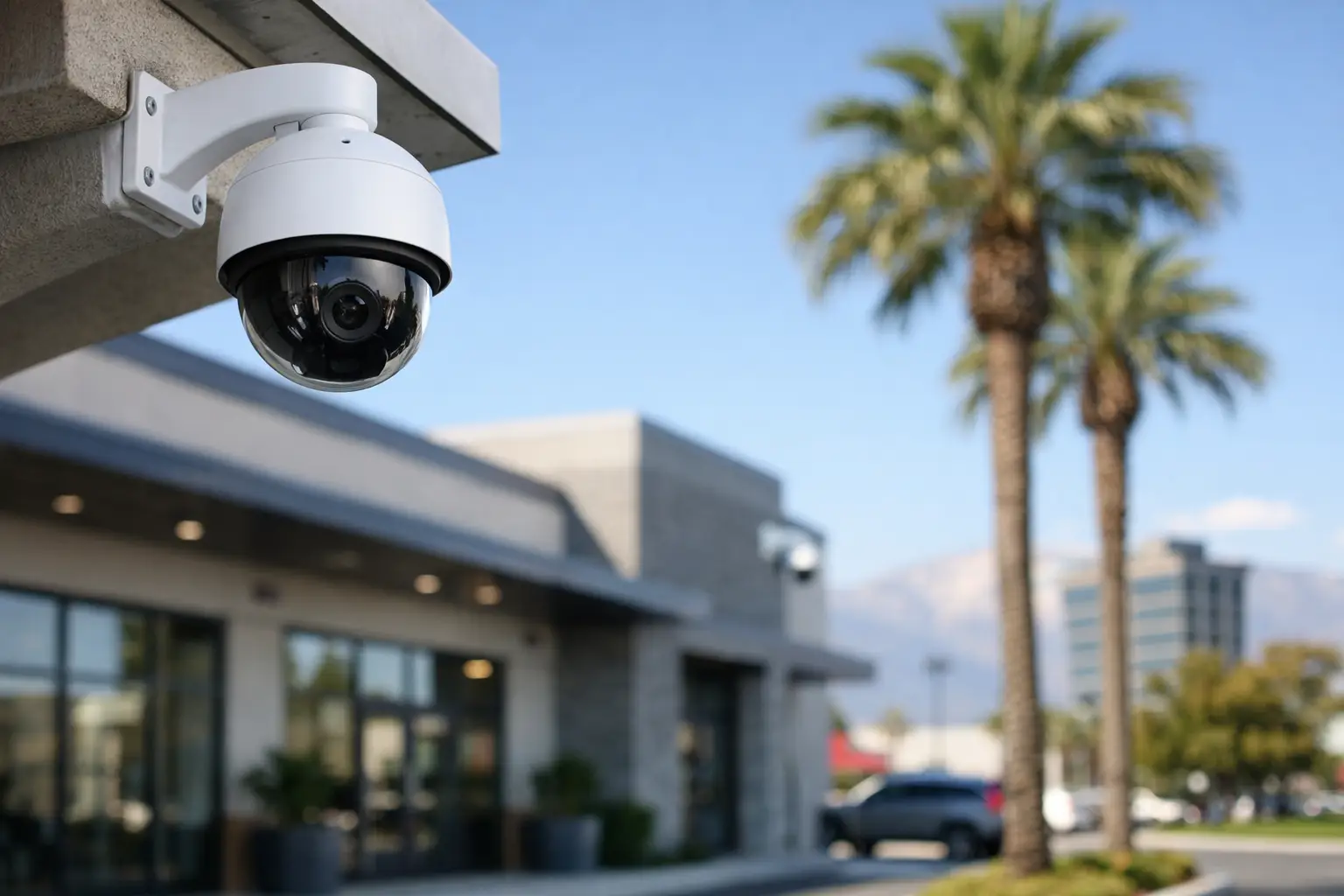
A parking lot incident at 5:30 a.m. can turn into a staffing issue, an insurance claim, and a customer service problem before your office even opens. That is why security cameras Ontario CA businesses choose should do more than record footage. They should help you see risk early, verify what happened fast, and support daily operations without creating more work for your team.
For commercial properties, camera systems are no longer just a box to check. They affect loss prevention, employee safety, visitor management, after-hours accountability, and even how quickly management can respond to a complaint or disruption. If your current system produces grainy footage, leaves blind spots, or requires piecing together multiple vendors, it is probably costing more than it is saving.
What businesses really need from security cameras in Ontario CA
Commercial security has different demands than a small residential setup. A warehouse in Ontario has different pressure points than a retail storefront, and an office building has different priorities than a school or medical facility. The right system starts with how the site operates, where people move, and which events actually need to be documented.
For many businesses, coverage begins at the perimeter – parking lots, gates, loading areas, and main entrances. From there, it extends to receiving zones, inventory areas, hallways, cash handling points, and any place where disputes, theft, or unauthorized access can occur. Good camera placement is not about putting devices everywhere. It is about seeing the right things clearly enough to act on them.
That is where many off-the-shelf systems fall short. They may be cheaper upfront, but they often miss the details commercial users care about most: license plates, facial identification at entry points, activity around dock doors, or reliable nighttime coverage. A business-grade system should be designed around evidentiary value, not just general visibility.
Why camera quality matters more than camera count
It is easy to assume more cameras automatically means better protection. In practice, too many poorly positioned cameras can create a false sense of coverage. A smaller number of properly selected cameras often delivers better results than a larger system with weak image quality and poor field-of-view planning.
Resolution matters, but so do lens type, lighting conditions, mounting height, and recording settings. A camera pointed at a back entrance may need wide dynamic range because sunlight changes throughout the day. A parking lot camera may need stronger low-light performance. A warehouse aisle may benefit from a tighter field of view to capture detail at longer distances.
There is also the question of retention. Some businesses need only a short recording window for internal review. Others need longer retention for liability, compliance, or recurring incident investigations. More storage increases cost, so this is one of those areas where the right answer depends on your operation, not a generic package.
AI features can help, but only when they fit the site
AI-powered CCTV has real value in commercial environments, especially when teams cannot monitor live footage all day. Features like person and vehicle detection, line crossing alerts, auto tracking, and smart search can reduce the time it takes to find an event and respond.
That said, AI should support your operation, not complicate it. On a busy property, too many poorly configured alerts can create noise and lead staff to ignore the system altogether. The goal is to set up intelligent triggers that match the actual risks on site. A distribution facility may want alerts near loading bays after hours. An office building may care more about vestibules, reception, and restricted interior areas.
When configured correctly, AI shifts the system from passive recording to active awareness. That is useful for both security and management oversight.
Security cameras Ontario CA companies should look for in a commercial system
A commercial camera project should start with site conditions, not product brochures. Before any equipment is selected, the installer should evaluate traffic flow, vulnerable areas, lighting, network capacity, and how the camera system may need to interact with access control or other low-voltage infrastructure.
This matters because the best result is rarely a standalone camera network. In many commercial settings, cameras work best when integrated with door access events, intercom activity, and the underlying cabling environment. If your access control system logs a door opening at an unusual time, camera footage should help verify who entered and what happened next. That connection gives managers better visibility and tighter control.
Businesses in Ontario also need to think about future growth. If you are adding buildings, expanding square footage, or opening additional service areas, the system should be scalable without forcing a complete replacement. That means planning for recorder capacity, network bandwidth, and infrastructure pathways from the start.
Professional installation is not a minor detail
Installation quality affects image quality, reliability, maintenance needs, and even legal defensibility. Cameras mounted too high, angled poorly, or installed on unstable infrastructure may technically work while still failing at the moment you need evidence.
Professional installation also reduces common problems like inconsistent power delivery, network bottlenecks, exposed cabling, and weather-related failures. For a business, those are not small issues. Downtime creates blind spots, and blind spots create risk.
Working with a licensed, bonded, and insured commercial installer also matters from a vendor accountability standpoint. Facility managers and owners are not just buying equipment. They are choosing who will touch their building, coordinate with existing systems, and stand behind the finished work.
Common use cases by property type
Retail businesses often need clear entrance coverage, POS area visibility, and parking lot monitoring to reduce shrink and resolve customer or employee disputes quickly. In these settings, fast access to recorded video can be just as important as the recording itself.
Industrial and warehouse facilities usually prioritize perimeter security, dock doors, yard visibility, and interior coverage around inventory movement. These sites often operate across multiple shifts, which makes after-hours visibility and remote access especially valuable.
Office properties tend to focus on entrances, reception areas, common spaces, and access-controlled doors. Here, the camera system often supports both security and operational review, such as verifying visitor movement or addressing building access issues.
Multi-tenant commercial properties need a slightly different approach. Coverage must protect shared areas while respecting tenant boundaries and privacy expectations. That balance requires careful planning, especially in lobbies, parking areas, corridors, and delivery zones.
How to tell when it is time to upgrade
If your team avoids using the current system because footage is hard to find, the system is already underperforming. The same is true if cameras regularly go offline, remote viewing is unreliable, or recorded video lacks the detail needed to identify people or incidents.
Another common sign is when business operations have changed but camera coverage has not. A building expansion, a reconfigured warehouse layout, new access points, or increased public traffic can all create security gaps. Systems should evolve with the site.
In some cases, the issue is not the cameras themselves but the infrastructure behind them. Aging cabling, poor switch capacity, or fragmented low-voltage systems can limit performance and make future upgrades harder than they need to be. A commercial evaluation should look at the full environment, not just the devices on the wall.
Choosing a provider for security cameras in Ontario CA
Not every installer is built for commercial work. Businesses should look for a provider that understands site assessments, infrastructure planning, code-conscious installation, and the realities of operating facilities with staff, customers, vendors, and delivery traffic moving through them every day.
A strong provider will ask how your business runs, where incidents typically occur, who needs access to footage, and whether the system should connect with access control, intercoms, or structured cabling upgrades. That approach leads to better results than selling a standard package.
For companies that want one accountable partner across security and low-voltage systems, that broader capability can make a real difference. Resource One Low Voltage Security focuses on commercial environments where surveillance, access, and infrastructure need to work together, not as separate projects.
The right camera system should make your property easier to manage, not harder to maintain. If your current setup leaves unanswered questions after an incident, it is time to rethink the design and the provider behind it.
A good commercial security system earns its value in the moments nobody plans for – and in the everyday moments when better visibility helps your business run with more confidence.