

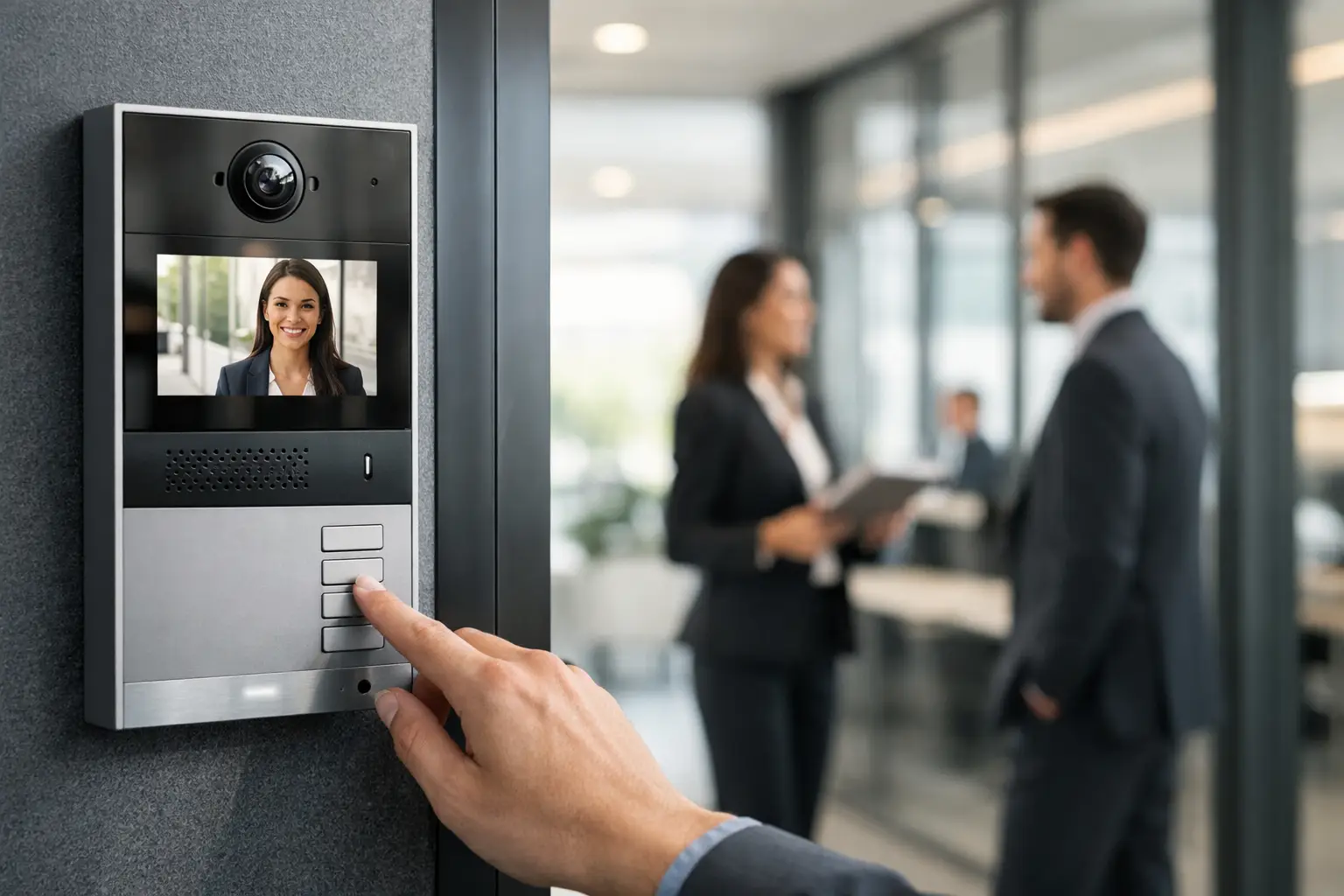
A delivery driver is at the front entrance, a vendor is waiting at the gate, and your receptionist is already juggling calls. That is where commercial video intercom systems earn their place. They give your team a clear way to see who is requesting access, speak with them in real time, and make fast entry decisions without relying on guesswork.
For business owners, property managers, and facility teams, that matters for more than convenience. Entry points are where security, operations, and customer experience meet. A weak front door process can create delays, frustrate staff, and expose your building to unnecessary risk. A properly designed intercom system helps bring order to that process.
What commercial video intercom systems actually do
At the most basic level, commercial video intercom systems combine video, two-way audio, and door or gate release controls. A visitor requests access at an entry station. Your staff can see them, talk to them, and either grant or deny entry from an interior station, front desk, mobile device, or integrated access control platform.
That sounds simple, but the business value is in how the system fits your operation. In a multi-tenant office property, it helps direct visitors to the right suite without constant manual intervention. In a warehouse or logistics facility, it helps screen drivers and after-hours arrivals before anyone opens a secured gate. In a school, medical office, or administrative building, it adds a stronger layer of controlled entry where staff need visibility before they unlock a door.
The right system is not just a camera at the front entrance. It becomes part of your broader security and communication infrastructure.
Why businesses are replacing older intercoms
Many commercial properties still use audio-only intercoms or aging call box systems that no longer match current security expectations. Staff may hear a voice, but they cannot verify who is standing outside. In some cases, the audio is poor, the hardware is unreliable, or replacement parts are hard to find.
Video changes that equation. Seeing a visitor reduces uncertainty and helps staff make better decisions. That is especially useful in buildings with high traffic, restricted areas, or multiple public-facing entrances. It also helps when deliveries, vendors, and service contractors arrive throughout the day and need to be screened quickly.
There is also a practical infrastructure reason to upgrade. Older systems are often isolated from the rest of the building’s technology. Newer commercial video intercom systems can work alongside access control, surveillance cameras, cloud management tools, and structured cabling. That creates a more unified security environment instead of a patchwork of disconnected devices.
Where commercial video intercom systems make the biggest impact
The best applications are usually the ones with repeated visitor interactions and a real need to control entry. Office buildings are a strong fit because they balance accessibility with tenant security. Industrial sites benefit because gates and side entrances need monitoring without pulling staff away from operations. Multifamily and mixed-use commercial properties use intercoms to manage deliveries, residents, guests, and vendors more efficiently.
Healthcare clinics and professional offices often benefit as well. They may need to protect staff, manage after-hours visitors, and avoid leaving front doors unsecured. Schools, houses of worship, and nonprofit facilities use video intercoms for similar reasons – they want to stay welcoming while still controlling who comes inside.
It depends, of course, on how the building is used. A small office with one controlled entrance may need a straightforward door station and indoor monitor. A larger campus may need multiple entry points, mobile app access, gate control, directory functions, and integration with access credentials. The equipment may look similar on paper, but the design should reflect the actual flow of people through the property.
What to look for in a business-grade system
Video quality matters, but it is not the only factor. A clear image helps staff identify visitors, especially in bright sun, low light, or challenging outdoor conditions. But audio clarity is just as important. If the person at the door cannot be understood, the system creates friction instead of solving it.
Durability matters too. Commercial entry stations are exposed to weather, frequent use, and sometimes abuse. Hardware should be chosen for the environment, especially for gates, parking areas, and exterior walls. Businesses in Southern California also need to think about heat, dust, and long-term outdoor exposure.
Ease of use should not be overlooked. A system is only effective if reception staff, managers, or tenants can use it without confusion. Clean call routing, simple visitor communication, and dependable door release functions make a difference every day.
Scalability is another major factor. Many businesses start with one entrance, then add more doors, a secondary tenant space, or remote management later. Choosing a platform that can grow with the property prevents an expensive reset down the road.
Integration is where the value increases
On its own, an intercom improves the front-end visitor process. Connected to other systems, it becomes far more useful.
When integrated with access control, your team can manage credentials, door schedules, visitor entry, and release permissions from a more centralized platform. When tied to surveillance, you can pair intercom activity with recorded video for better incident review. If the property already has structured cabling or network upgrades in place, the system can often be deployed more cleanly and with fewer performance issues.
This is one reason many commercial buyers prefer a provider that understands low-voltage infrastructure as a whole. Intercoms are not installed in a vacuum. Their performance depends on cabling quality, network configuration, power requirements, mounting locations, and how well the equipment fits into the rest of the building’s security strategy.
Common mistakes during selection and installation
The biggest mistake is buying based on device features alone. A property manager may compare screens, camera specs, or app functions, but the real question is how the system will operate at that site. Where will visitors approach from? Who answers calls? How many doors need release control? What happens after business hours? Those details should shape the design.
Another common issue is poor placement. A camera mounted too high, a call station facing direct glare, or a monitor installed where staff cannot respond quickly will reduce the system’s usefulness. The same goes for weak wiring and inconsistent network planning. Commercial systems need stable performance, especially where security and entry control are involved.
There is also a trade-off between convenience and control. Mobile-based answering is useful, especially for managers who need flexibility across multiple sites. But some businesses still need fixed stations at a reception desk or security office for accountability and consistency. In many cases, the best setup is a combination of both.
Why professional design matters for commercial properties
A commercial intercom project should start with the property, not the product catalog. Entry patterns, staffing, tenant needs, business hours, compliance concerns, and expansion plans all affect the right solution.
That is why professional site review matters. A qualified commercial installer can identify the best entry station locations, determine whether your current cabling and network can support the system, and recommend whether integration with access control or CCTV makes sense now or later. That planning helps avoid blind spots, unnecessary hardware, and future rework.
For businesses in Ontario, Rancho Cucamonga, Los Angeles, Riverside, and surrounding Southern California markets, local support also matters. Commercial security systems are part of daily operations. If a front entrance station fails or a gate call box stops communicating, you need responsive service from a contractor that understands business environments and installation standards.
Resource One Low Voltage Security works with commercial clients that need exactly that kind of practical, integrated approach. The goal is not simply to install an intercom. It is to help secure the property, support the way your team works, and create a system that remains reliable as your business grows.
Choosing a system that fits your business
If your current entry process relies on blind buzzing, inconsistent receptionist handling, or outdated hardware, it may be time to reassess. Commercial video intercom systems can tighten access control, reduce front-desk friction, and improve visibility at the places where security decisions happen most often.
The right answer is not always the most complex system. Sometimes a single well-placed station and reliable door release solve the problem. In other cases, a larger integrated platform is the smarter investment. What matters is choosing a system built around your building, your staff, and the way your property actually operates.
When entry control gets easier and more secure at the same time, the benefits show up every day – in faster visitor handling, better accountability, and fewer moments where your team is left making a security decision without enough information.